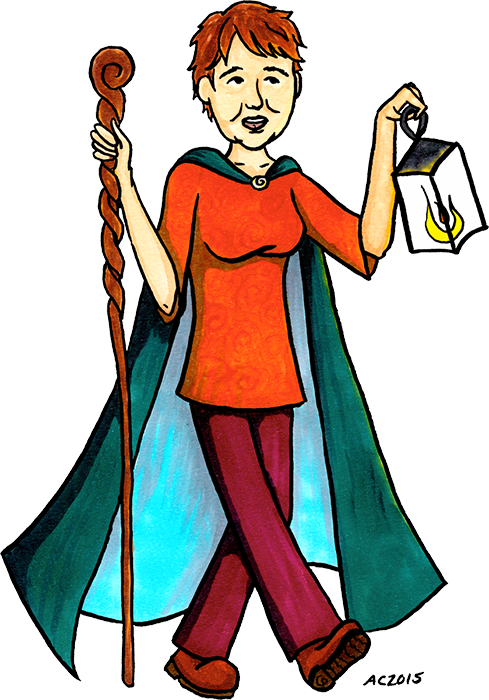
Hi, I’m Jo.
I’m a feminist sociologist.
I’m a parent (to a grown kid).
I make things, mostly with textiles (knitting, quilting, sewing).
I sing in a choir (alto).
I practice yoga.
I watch TV and hang out on social media.
I drink beer and grow my own veg.
Freedom and autonomy are a big part of my life. I run my own business. I homeschooled my daughter. I have grown my own food, even reared the meat. I have never had exclusively-indoor cats, nor am I a dog or cat person; I have both.
However, to practice freedom and autonomy involves support, community and compromise. I bring this sense of freedom to my understanding of academia and use this ethos to support you through your careers and work-life balance.
I believe that your (academic) work is important and valuable. You get to define what success looks like for you and go for it. You can learn more about how I approach academic writing and life in the Library, which is a type of blog that functions more like an archive.
More about me:
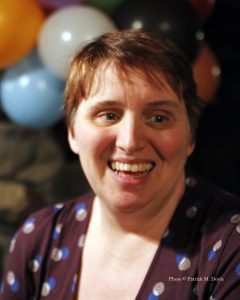
I’m a big picture thinker. I see patterns and connect dots. That’s probably what attracted me to studying and researching sociology in the first place. I am more interested in questions than answers. I don’t think academic work is about winning arguments; the creation of knowledge is inherently collaborative. I consider “thought provoking” to be the highest praise.
My Dad instilled in me a belief that it’s important to do what you love and to do it well. He gave me a profound trust that I could earn a living that way. He also showed me that a career path is not a straight line and might even have some abrupt bends in it. I have seen evidence that he is right.
I have made some big changes in my life. I grew up in Canada and then decided to come to the UK as a student. I stayed for a long time, creating a family and career here. And then I made a major career change and moved back to Canada with that family. 13 years later, circumstances changed again and I moved back to the UK. Change is difficult, even when you want it. I also have experience of major changes that I did not choose but was involved in managing, and have also had some training in change management.
- From my yoga practice I’ve learned that you can aim for an ideal while honouring your own specificity. I know that working within your comfort zone can expand your comfort zone. Effort and work need not be painful. I know that what you can do today is not the same as what you can do tomorrow, and that progress is not linear.
- From my creative work, I have learned that sometimes you just need to try things. That it’s okay to rip things out and try again. That we get better with practice. And that sometimes we don’t know what the final object will look like until we are part way through making it. You can find me on Ravelry.
- From my academic career (in the UK), I bring a knowledge of the competing demands, organizational culture, and day to day realities of your work. I was awarded my PhD (University of Essex) in 1994, and taught and published as an academic sociologist until 2002. Through my involvement in administration and service, I discovered that I much prefer helping others realize their academic dreams and began to transition out of that career and into this one. My transitional jobs with a granting agency (in Canada) gave me deeper knowledge of the funding process, peer review, and the wider policy environment influencing your day to day academic life.
I am highly suspicious of certainty and control. It seems epistemologically impossible. There is too much that we cannot know. We live in a highly complex system. I am not a nihilist though. Your destination may not be clear at the outset, but you can identify key elements of it. There may be many things that will throw you off course, but there are many routes to the destination and you always have choices. Furthermore, the core elements of your vision guide your journey and the decisions you make. Your destination may turn out to be quite different from what you expected, but it will have those core elements.
I believe that you can love your job and find your work meaningful AND have a life outside your work doing other things that make your life meaningful, whatever they are. I love my work but my work is not my whole life.
I don’t do this alone.
There are lots of things I can do and more that I could do if I put my mind to it. I choose to focus on my best contribution and doing the work I love. I have a support team who love to do different things. A good old-fashioned organic division of labour works for us.